# Figure AI Humanoid Robots Are Entering Factories: What It Means for Manufacturing in 2026
**Published:** April 3, 2026 | **Reading time:** 7 min

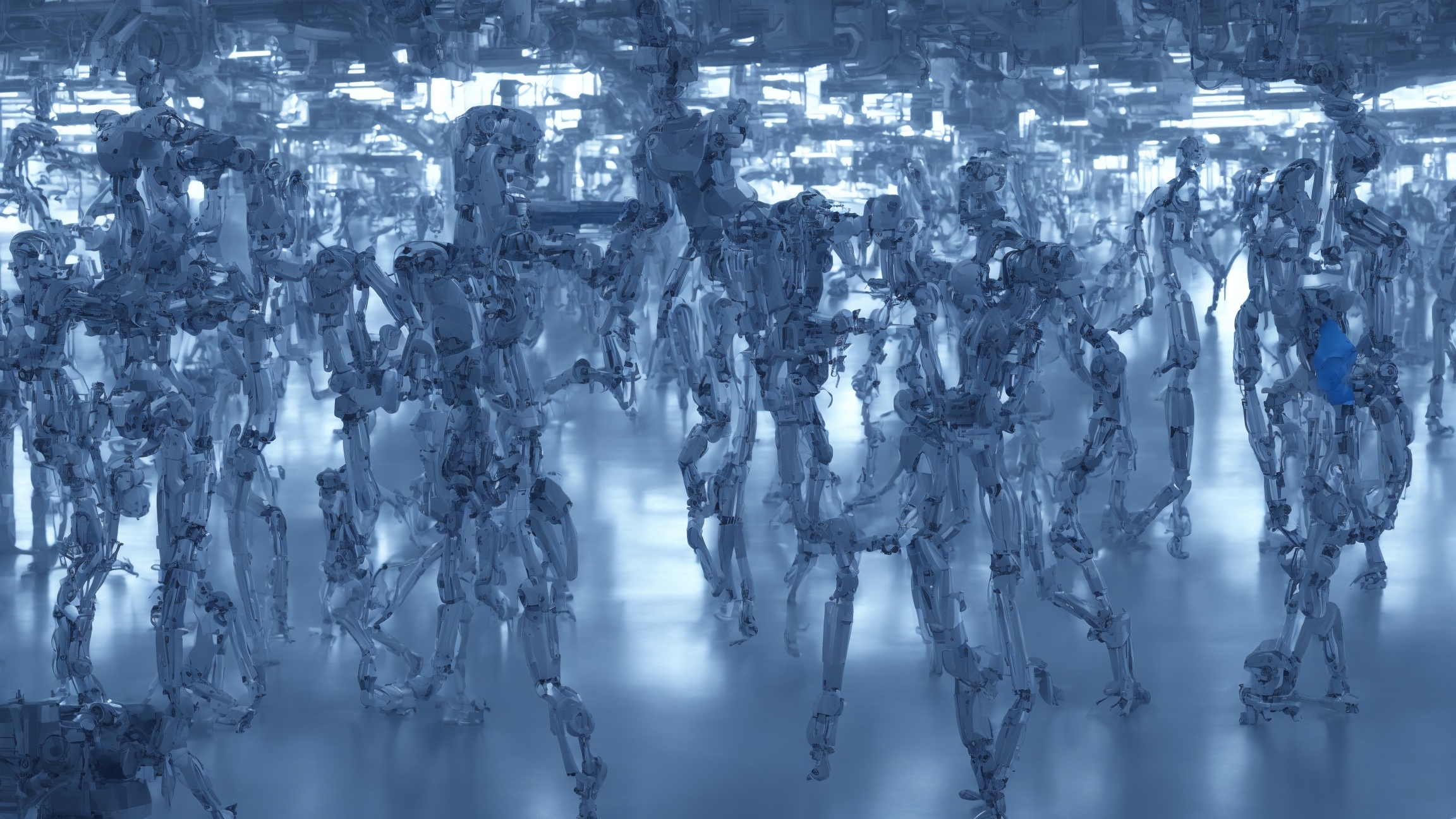
*Featured Image Prompt: “Futuristic humanoid robots working alongside human workers inside a modern automotive factory, industrial robotic arms, clean manufacturing floor, blue and silver color palette, cinematic lighting, ultra realistic, 8k, professional editorial style”*
—
## Introduction
For years, humanoid robots lived in that awkward space between exciting demo and practical disappointment. They looked impressive on stage, but most business leaders had no real reason to take them seriously.
That is starting to change.
Figure AI’s move into real factory environments, including work connected to BMW manufacturing operations, matters because it pushes humanoid robotics out of the concept phase and into actual industrial use. That is a much bigger story than another flashy robotics headline.
If these systems can perform reliably in production settings, manufacturers may no longer need to redesign entire facilities just to automate more work. And that is what makes this moment important.
—
## Why Figure AI’s Factory Deployment Matters
Traditional industrial robots are extremely good at what they were built to do. They are fast, precise, and dependable in structured environments. But they usually perform best when the workspace is designed specifically for them.
Humanoid robots promise something different: the ability to work inside spaces already designed for people.
That shift could make automation more practical in facilities that are too expensive or too complex to rebuild from the ground up.
### Why manufacturers are paying attention
– **Less infrastructure redesign** when expanding automation
– **More flexibility** in existing production environments
– **Faster deployment potential** for repetitive shop-floor tasks
– **Broader use cases** across warehousing, logistics, and manufacturing
That is why Figure AI in factories is such a meaningful step. The story is not just that the robots exist. It is that companies are testing whether they can create real operating value.
—
## What Figure AI’s Humanoid Robots Are Designed to Do
Figure AI’s humanoid robots are being positioned for tasks such as:
– material handling
– moving parts or components between stations
– repetitive assembly support
– general shop-floor assistance in industrial workflows
The appeal is straightforward: a humanoid robot can potentially move through human-scale spaces, interact with tools and stations built for workers, and support tasks that would otherwise require either manual labor or expensive custom automation.
In manufacturing, that flexibility is not a small advantage. It can directly affect staffing, throughput, and how quickly a factory can adapt to operational changes.
—
## The Business Case for Humanoid Robots
For a long time, humanoid robots were easy to admire and hard to justify on a spreadsheet. That is beginning to shift as labor pressure, AI capability, and automation demand all rise at the same time.
### 1. Labor shortages are not going away
Many factories still struggle to fill repetitive, physically demanding, or unpopular roles. Humanoid robots are being pitched as support for exactly these kinds of jobs.
### 2. Manufacturers want more flexible automation
Fixed automation works well, but it is often rigid. A more adaptable robot platform could help companies automate tasks that change too often for traditional systems.
### 3. Safety and consistency still matter
Robots can reduce repetitive strain, limit human exposure to less desirable tasks, and deliver more predictable performance in structured workflows.
### 4. AI makes these robots more useful than older generations
What makes modern humanoid robotics more credible is not just the hardware. It is the software layer: computer vision, motion planning, and multimodal AI systems that help robots interpret and act in more dynamic settings.
—
## Will Humanoid Robots Replace Human Factory Workers?
Not in the simple, dramatic way headlines often suggest.
In the near term, humanoid robots are more likely to **augment** factory teams than replace them outright. The first wave will probably focus on narrow, repetitive, and physically taxing tasks where hiring is difficult and the ROI is easiest to prove.
That means early adoption may look like this:
– humans supervising workflows
– robots handling repetitive support tasks
– mixed human-machine teams on the factory floor
– phased rollouts tied to reliability and cost savings
This is the more useful conversation to have. The real issue is not whether all factory jobs disappear overnight. It is which tasks can be automated first without disrupting operations.
—
## The Challenges Figure AI Still Has to Prove It Can Solve
Even with real factory deployment, humanoid robotics is still early.
### Reliability in live production
Factories are unforgiving environments. If a robot cannot operate consistently, the business case weakens fast.
### Cost versus alternatives
The total deployment cost has to make sense compared with both human labor and traditional industrial automation.
### Maintenance and downtime
Humanoid robots are complex systems. Servicing, spare parts, software stability, and downtime management will all shape adoption.
### Workforce adaptation and safety policy
As humanoid robots become more visible on the factory floor, companies will need clear rules around safety, training, and worker communication.
—
## What Figure AI Means for the Future of Manufacturing
Figure AI’s progress suggests that the next phase of industrial automation could become more adaptive, more general-purpose, and more compatible with the environments companies already have.
If that happens at scale, the impact will not stop at automotive manufacturing.
Potential future use cases include:
– warehouses
– automotive plants
– electronics assembly
– retail backroom logistics
– healthcare support environments
That is why this story matters beyond robotics enthusiasts. It is really about how AI changes labor economics, operations strategy, and the design of industrial work itself.
—
## Final Take
Figure AI’s factory deployment is one of the strongest signs yet that humanoid robots are moving from impressive concept to commercial trial.
It is still early. The technology has to prove reliability, economics, and scalability in real working conditions. But the direction is becoming hard to ignore.
For manufacturers, this is not the moment for panic or hype. It is the moment for practical evaluation.
Watch the pilots. Study the ROI. Identify the tasks that are repetitive, costly, and consistently hard to staff. That is where humanoid robots are most likely to deliver value first.
In 2026, the humanoid robot conversation is no longer theoretical. It has officially reached the factory floor.
—
**Meta Information:**
– **Slug:** figure-ai-humanoid-robots-factories-2026
– **Meta Description:** Figure AI humanoid robots are entering factories in 2026. Here’s what that means for manufacturing, automation strategy, labor, and the future of industrial AI.
– **Keywords:** Figure AI, humanoid robots, factory automation, manufacturing AI, BMW robots, industrial robotics, 2026
– **Category:** Tech Trends
– **Word Count:** ~1020