

For Muawia Tech readers, CISA, NSA, global cyber agencies issue guidance to detect and mitigate 17 Active Directory compromise techniques connects everyday technology decisions with security, resilience, governance, and operational control. Beyond the headlines, it is a practical planning concern for security leaders, IT teams, cloud administrators, and business owners.
A practical assessment starts by setting the hype aside and asking operational questions. What problem does it solve, and which users will it affect? What data or permissions does it involve? What processes need to change? Most importantly, what evidence shows that the new approach is safer, faster, or more reliable than the current one?
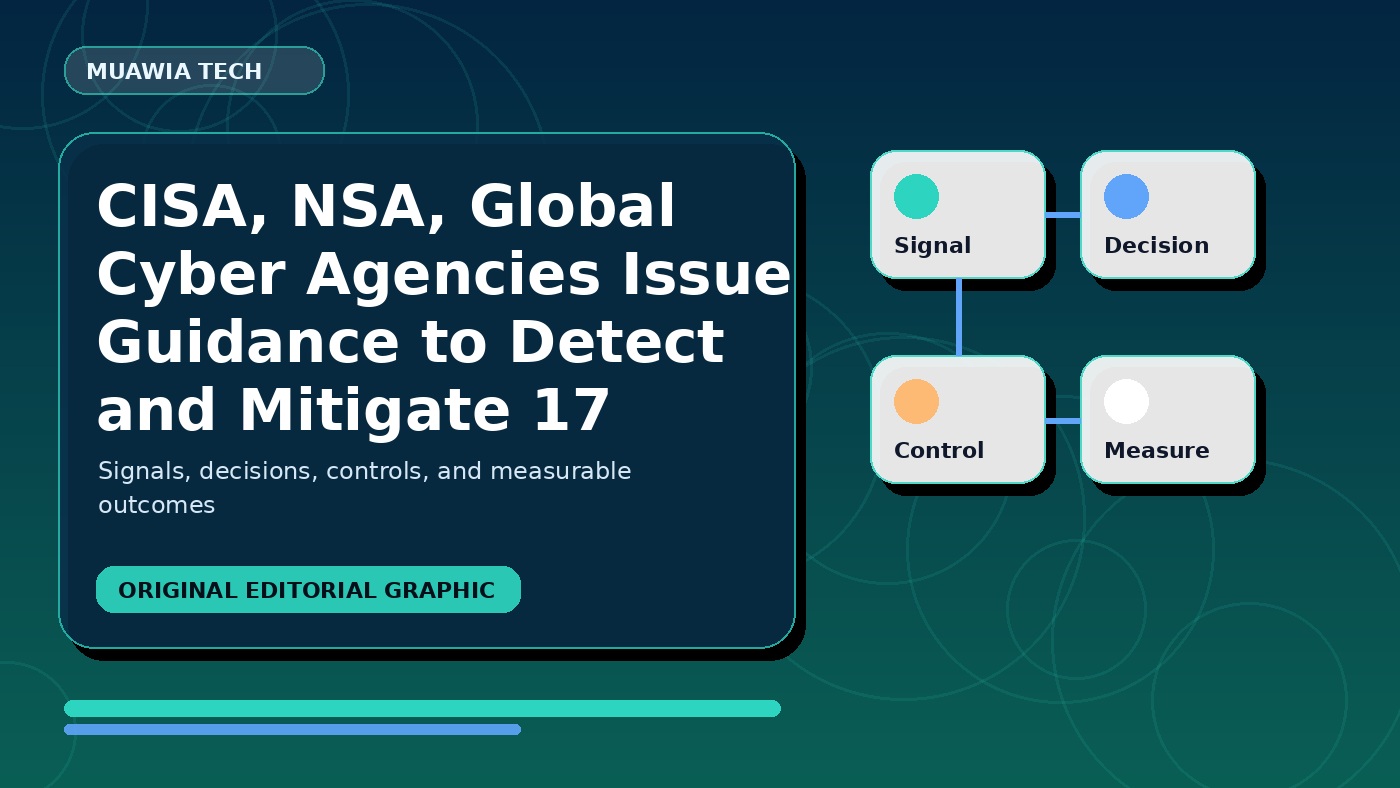
Why CISA, NSA, Global Cyber Agencies Issue Guidance to Detect and Mitigate 17 Active Directory Compromise Techniques matters now
Organizations face growing pressure to adopt new technology without introducing unmanaged risk. In practice, CISA, NSA, global cyber agencies issue guidance to detect and mitigate 17 Active Directory compromise techniques should be assessed based on its business impact, user behavior, data exposure, and long-term maintainability. What seems simple at first may affect procurement, training, compliance, customer trust, and everyday operations.
Assign one person to own CISA, NSA, global cyber agencies issue guidance to detect and mitigate 17 Active Directory compromise techniques and give them the authority to pause the rollout if the evidence is weak or the controls fail.
Main risks and opportunities
The benefits are clear: faster work, clearer decisions, stronger controls, and less time wasted on manual tasks. But teams may adopt a tool or process before they fully understand its limits. Common gaps include weak ownership, missing logs, unclear approval rules, poor documentation, and too much confidence in automation. A useful plan weighs the expected benefits against realistic ways the system could fail.
Document the assumptions behind the pilot. If the results differ from expectations, the team can adjust the design rather than defend an outdated plan.
How teams should evaluate it
Begin by mapping the workflow. Identify who uses it, what information enters the process, where decisions happen, and which systems it touches. Next, review identity controls, endpoint visibility, backup readiness, patch discipline, SaaS permissions, cloud logging, and ownership of incident response. Even a simple map can show whether the main concern is training, tooling, governance, or a deeper architectural problem.
Choose a small test group that reflects actual working conditions. A pilot that excludes difficult users, sensitive data, or peak workloads will produce misleading results.
A practical implementation framework
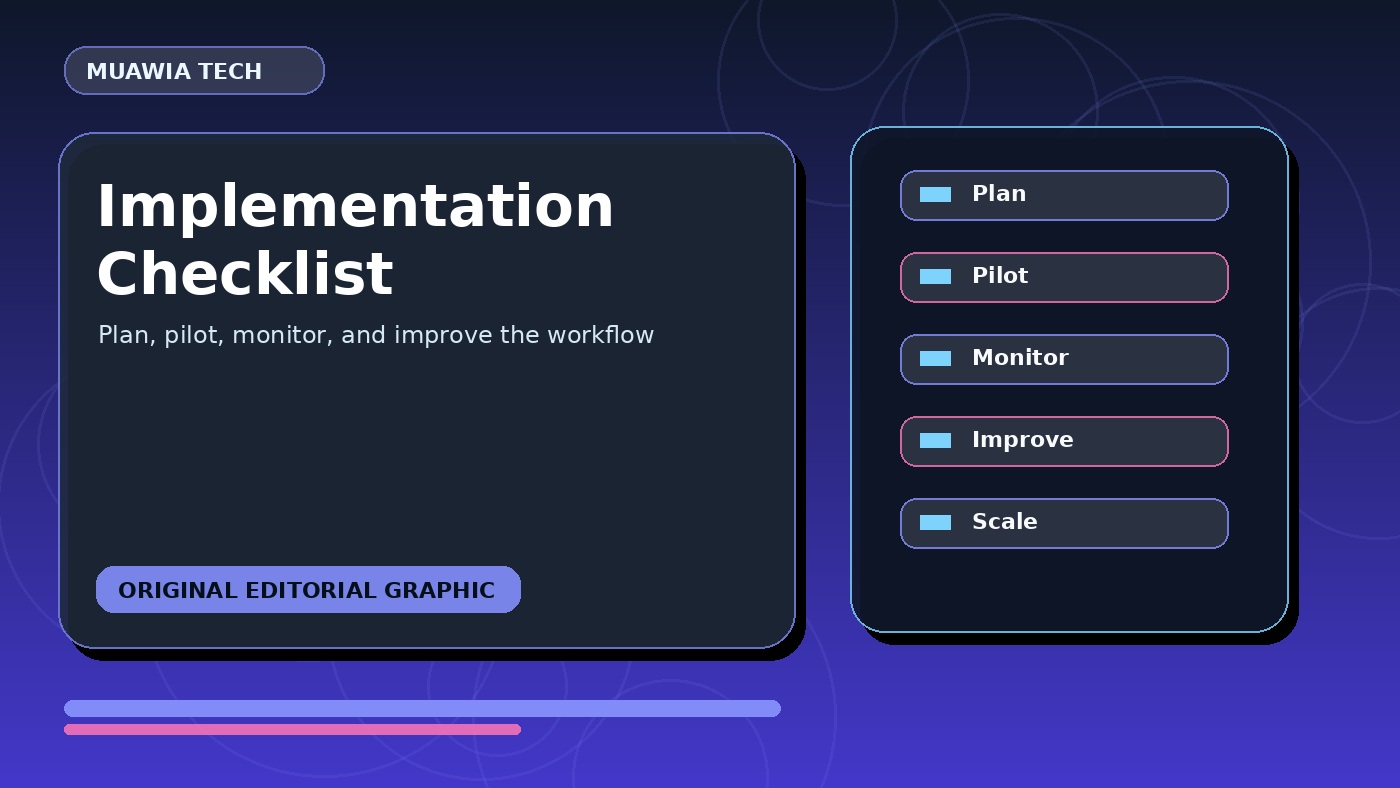
A safe implementation can follow this sequence: inventory assets, assign owners, score risks, review policies, run a pilot, monitor performance, document the process, and make quarterly improvements. This keeps the project grounded in real conditions. Rather than rolling out a broad change all at once, teams can test the approach with a small group, measure the results, address weak points, and then expand with confidence.
Document the exception process before launch. Staff need to know who can approve unusual cases, where to log incidents, and when to involve the security or legal teams.
What good governance looks like
Good governance is not a lengthy document that nobody reads. It consists of clear rules that reflect how people actually work. These rules should cover acceptable use, approval requirements, data boundaries, escalation paths, monitoring expectations, and review cycles. Users are more likely to follow governance when it is simple and easy to find.
Review metrics in context instead of assuming every increase signals progress. Faster completion helps only if quality, access control, and recovery remain acceptable.
Metrics to track
Teams should track adoption, time saved, error reduction, avoided incidents, support tickets, user satisfaction, and policy exceptions. Each metric should inform a decision. If a feature saves time but causes more review failures, adjust the process. If a control reduces risk but prevents legitimate work, the rollout may require better training or more precise rules.
Test the recovery path just as carefully as the normal workflow. Teams must be able to revoke access, restore data, investigate logs, and return to a known, safe process.
Common mistakes to avoid
One mistake is treating a trend as a complete solution. Another is overlooking the users who must apply it under pressure. Teams may also fail to document recovery paths for when something goes wrong. Finally, measuring activity, such as the number of users or prompts, says little about outcomes such as quality, safety, or business value.
End the pilot with a written decision to expand, revise, or stop it. Recording the decision prevents the experiment from becoming permanent simply because no one reviewed it.
Internal links and further reading
For more on risk management, AI adoption, cloud operations, and productivity workflows, explore our related Security and Cloud coverage.
FAQ
Is CISA, NSA, Global Cyber Agencies Issue Guidance to Detect and Mitigate 17 Active Directory Compromise Techniques intended only for large organizations?
No. Smaller teams often benefit because they need simple, repeatable processes just as much as larger enterprises, if not more. Start with one high-value workflow and keep the rollout manageable.
What is the safest first step?
Begin with an inventory and a pilot. Select one workflow, set clear success criteria, identify the risks, and test it with a small group before expanding.
How often should the process be reviewed?
Review the process after the initial pilot, again after the first month of wider use, and then every quarter. Regular checks are necessary because the technology, its risks, and the way people use it can change quickly.
What should leaders ask before approving adoption?
Ask which problem needs solving, what data the process uses, who owns it, how the results will be checked, and what happens if the tool or workflow fails.
Conclusion
Treat CISA, NSA, global cyber agencies issue guidance to detect and mitigate 17 Active Directory compromise techniques as a practical operating decision. Teams that gain value from it define the use case, manage the risks, train users, measure results, and keep improving the workflow. This turns a current topic into a lasting capability.
Step-by-step rollout plan
Start by documenting the current process and its pain point. Define the desired result in measurable terms, then identify every system, user, data source, and permission affected by the change. Set up a pilot group with clear start and end dates. During the pilot, collect examples of both successful and failed outputs. Use what you learn to update the guidance before expanding the rollout. Following this sequence helps teams avoid scaling a confusing process.
Security and privacy review
Every modern technology workflow needs a privacy review. Teams must understand whether sensitive data is entered, stored, exported, or shared with third parties. Only people who need the data should have access to it, and logs should be kept long enough to investigate problems. Workflows involving customer information, finance, health, legal matters, or internal strategy require stricter approval rules.
Train users without slowing them down
Training is most effective when it is brief, practical, and tied to the user’s work. Provide examples users can copy, screenshots that show the correct steps, and a straightforward checklist for risky situations. Skip abstract policy language. Users should know exactly what to do when they encounter an unexpected result, receive a suspicious request, or handle a task that needs human review.
How to keep improving
After launch, gather feedback from users and reviewers. Pay attention to recurring errors, unclear prompts, unnecessary approvals, and missing integrations. Schedule improvements rather than leaving them to chance. A monthly review gives you time to remove friction, update templates, retire ineffective steps, and make successful experiments part of your standard operating procedures.
Decision checklist for managers
Managers should make sure the owner, scope, user group, data boundary, approval path, and success metric are clearly defined. They should also determine which tasks will stop or become simpler after the team adopts the new workflow. Otherwise, the team may add more tools while keeping the old manual work, weakening the business case and causing confusion.
Operational playbook
A practical playbook should cover routine use, exception handling, review responsibilities, and rollback procedures. It should identify the person or team responsible for keeping it up to date and provide examples of acceptable and unacceptable use. A clear playbook makes the workflow easier to audit, teach, and refine as new risks or opportunities emerge.
Evidence register
Keep a straightforward record of the evidence used for each rollout decision. Note the test performed, who reviewed it, the expected result, what happened, and any limitations that could affect the conclusion. This gives future reviewers the context they need to understand why the team expanded, changed, or stopped the workflow. It also preserves the details required for security, quality, and operational reviews instead of replacing them with an overly confident summary.
Stakeholder review
Include the people who run the process in the review before rolling it out more widely. Technical owners can explain the system’s limitations, while daily users can spot steps that seem reasonable on paper but break down under time pressure. Bring in security, privacy, legal, or customer service reviewers when the workflow affects their areas. Document any unresolved concerns, then assign each one an owner and a deadline rather than assuming that attendance means approval.
Check costs and value
Compare the workflow’s full operating cost with the results it produces. Account for setup, licenses, training, review time, maintenance, support, and the work needed when outputs fail. Weigh those costs against measurable changes in completion time, quality, risk, or service capacity. This helps teams tell the difference between a useful capability and a tool that looks impressive in a demonstration but creates more work in production.
Change communication
Tell affected users what is changing, what will remain the same, and where to get help. Explain the practical reason for the new workflow instead of using vague slogans about transformation. Give users a clear date, brief instructions, and a way to report problems. Review early feedback promptly so preventable friction does not become an accepted part of the process.