
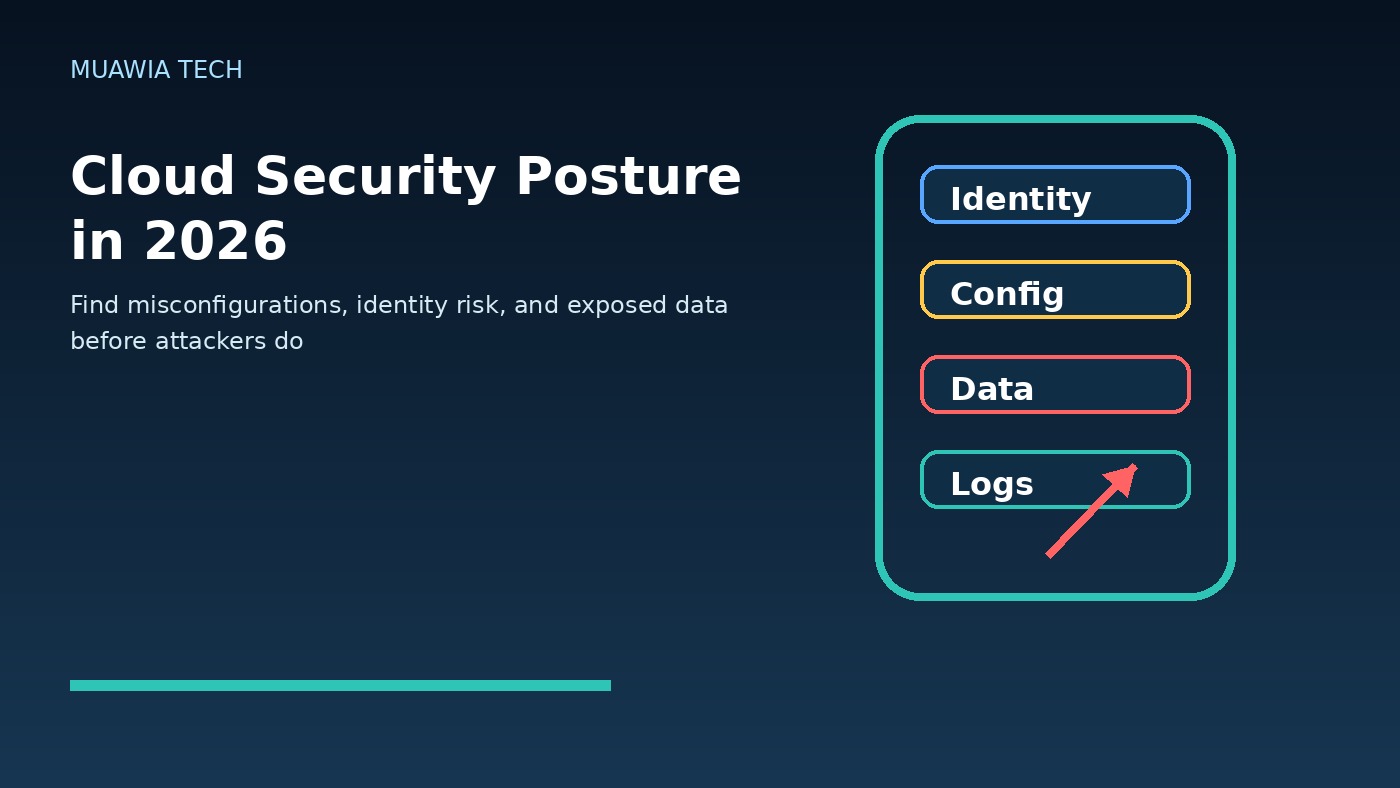
Cloud security posture is now a board-level risk topic, not just an infrastructure detail. In 2026, businesses depend on cloud platforms, SaaS applications, managed databases, containers, serverless functions, APIs, and remote administration tools. That flexibility helps teams move quickly, but it also creates thousands of small decisions that can become security gaps: an overly broad identity role, a public storage bucket, a forgotten test server, an exposed management port, or a database snapshot copied into the wrong account.
Attackers do not need every control to fail. They need one weak path that gives them access, visibility, or leverage. A strong cloud security posture program helps organizations find that path first. The goal is to continuously understand what exists, who can access it, which data is exposed, what is misconfigured, and which risks matter most to the business.
This guide explains how companies can build a practical cloud security posture discipline without turning security into a bottleneck. The emphasis is on visibility, prioritization, identity, data exposure, monitoring, and repeatable operating habits.
What cloud security posture means in practice
Cloud security posture is the current state of your cloud risk. It includes configuration, identity permissions, network exposure, data protection, logging, workload security, and governance. A posture program asks practical questions: Do we know every cloud asset we operate? Are any storage locations public? Are administrator privileges limited? Are secrets stored safely? Are logs enabled? Can we prove that critical systems are patched, encrypted, and backed up?
Tools such as cloud security posture management (CSPM), cloud-native application protection platforms (CNAPP), cloud infrastructure entitlement management, and vulnerability scanners can help. But posture is not only a tool category. It is a management rhythm. A company can buy a scanner and still remain exposed if nobody owns the findings, fixes exceptions, or checks whether the same mistakes return next month.
Why cloud posture is harder in 2026
Cloud environments change faster than traditional data centers. Developers create resources automatically through infrastructure as code. SaaS platforms integrate with identity providers. AI services process documents and business data. Containers and serverless functions appear and disappear quickly. Teams may operate across multiple regions, accounts, tenants, and vendors.
That speed makes manual review unreliable. A spreadsheet of cloud assets becomes outdated almost immediately. Security teams need automated discovery and clear ownership. They also need context. A test machine with no data may be low priority, while a public database containing customer records is urgent. Treating every alert the same overwhelms teams and delays the fixes that matter most.
The highest-risk posture gaps
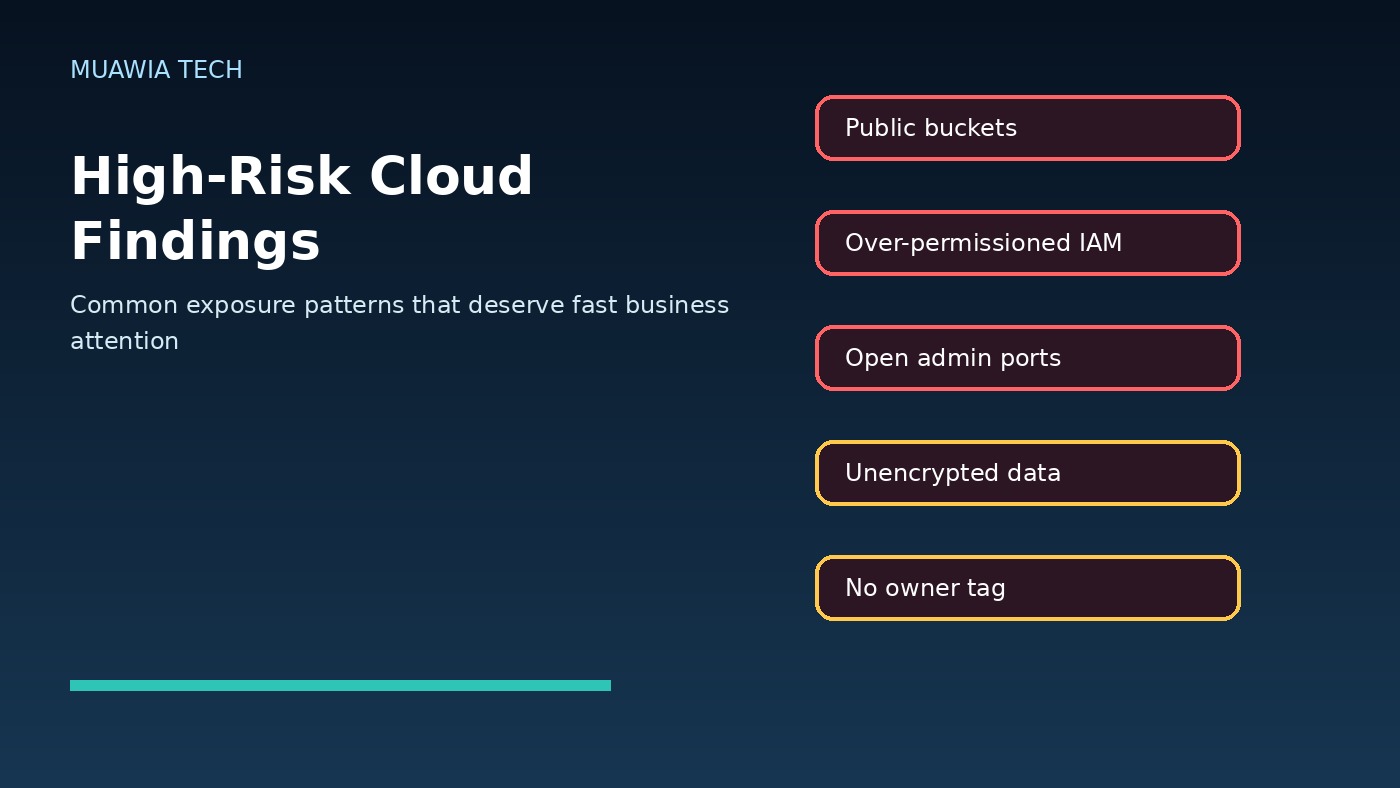
Most damaging cloud incidents involve a few repeat patterns. Publicly exposed storage remains a classic problem because it can leak backups, logs, source files, exports, and customer documents. Over-permissioned identities are equally dangerous because a stolen user, service account, or access key can move deeper into the environment than expected. Exposed management interfaces create a direct attack path. Weak segmentation lets one compromised workload reach sensitive systems. Missing logs make investigation slow and uncertain.
Data protection is another major area. Encryption should be standard, but encryption alone is not enough if too many identities can decrypt, copy, or share sensitive information. Businesses should know where regulated, confidential, and customer data lives. They should also understand who can access it, whether access is logged, and whether risky sharing is blocked.
Start with a reliable inventory
The first control is visibility. You cannot secure resources you do not know exist. Build an inventory that covers cloud accounts, subscriptions, projects, virtual networks, storage, databases, compute instances, containers, serverless functions, identity roles, API keys, domains, certificates, and third-party integrations. Include owner, environment, business purpose, data classification, and lifecycle status where possible.
Inventory should be automated through cloud APIs and refreshed frequently. It should also identify orphaned assets. If a resource has no owner, no recent activity, no tag, or no clear business purpose, it deserves review. Many cloud exposures begin as temporary resources that nobody removed after a project ended.
Make identity the center of posture management
In cloud environments, identity is often the real perimeter. Users, groups, roles, service accounts, workloads, and automation tokens determine what can happen. A clean network diagram is useful, but an overpowered identity can bypass many assumptions. Businesses should review administrator roles, cross-account trust, long-lived access keys, unused permissions, and service accounts with broad privileges.
Least privilege should be practical, not theoretical. Start with the most sensitive systems and the most powerful roles. Remove unused access, require stronger authentication for human administrators, rotate old credentials, and monitor privilege escalation paths. For automation, prefer short-lived credentials, scoped permissions, and clear ownership. If a token is embedded in an old script and nobody knows what it does, it is a posture risk.
Prioritize findings by business impact
Cloud scanners can produce hundreds or thousands of findings. A mature program separates noise from risk. Prioritization should consider exposure, sensitivity, exploitability, privilege, internet reachability, data type, and business criticality. A low-severity issue on a public system with sensitive data may deserve attention before a higher-severity issue in an isolated sandbox.
Good posture dashboards show risk in terms that engineering and leadership can act on: exposed customer data, public admin access, critical workloads without backups, production identities with unused administrator rights, or internet-facing systems missing patches. The best reports connect technical findings to potential business outcomes such as downtime, breach notification, financial fraud, or regulatory exposure.
Use policy as code, but verify reality
Infrastructure as code can reduce mistakes by making configuration reviewable and repeatable. Security teams can define guardrails for encryption, public access, identity roles, logging, and network exposure. Policy-as-code checks can block unsafe changes before deployment. However, runtime verification is still necessary. Emergency changes, manual console edits, imported resources, and third-party tools can create drift from the approved template.
The practical approach is to combine preventive controls with detective controls. Block the most dangerous patterns when possible, such as public storage or unrestricted admin ports. Then continuously scan the live environment to catch drift, exceptions, and legacy resources.
Monitor for change, not just compliance
Posture management is not a quarterly audit. Cloud risk changes whenever someone deploys, grants access, connects a SaaS app, creates a key, or opens a network route. Monitoring should highlight meaningful changes: a storage bucket becoming public, a new administrator role, a disabled log source, a database snapshot shared outside the account, or a workload suddenly exposed to the internet.
Alerts should be routed to the right owners with enough context to fix the issue. If every alert goes to a central security mailbox, response will be slow. Assign ownership through tags, repositories, team mappings, or service catalogs. Track whether fixes are completed and whether exceptions expire.
Build a remediation workflow
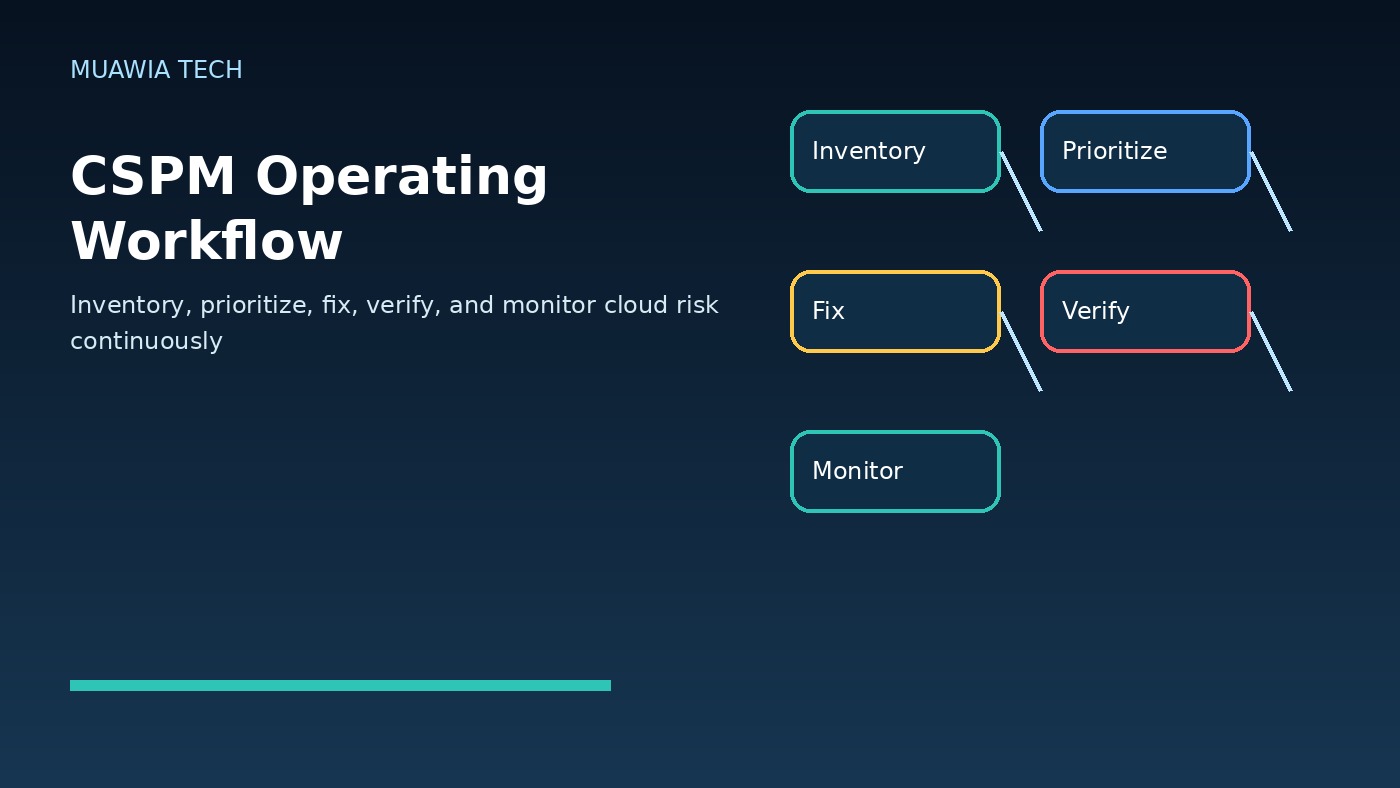
Finding risk is only half the job. A cloud security posture program needs a remediation workflow. Each finding should have severity, owner, due date, evidence, recommended fix, and verification status. High-risk issues should trigger fast response. Medium-risk issues should be grouped into sprints or maintenance windows. Accepted risks should have business approval and an expiration date.
Verification is important. Closing a ticket because someone changed a setting is not enough. The scanner or cloud API should confirm that the exposure is gone. If the same issue returns, treat it as a process problem. Maybe a template is unsafe, a team lacks training, or a guardrail is missing.
Connect posture to incident response
Cloud posture data can make incident response faster. During an investigation, teams need to know which identities had access, which resources were public, what logs exist, and where sensitive data was stored. A current inventory and permission map shorten the time between suspicion and containment.
Businesses should also run tabletop exercises around cloud scenarios: exposed storage, compromised access key, malicious OAuth app, abused admin role, ransomware against cloud workloads, or accidental deletion of production data. These exercises reveal whether monitoring, backups, access control, and communication plans work together.
Metrics leadership should ask for
Executives do not need every technical finding, but they do need posture indicators. Useful metrics include number of internet-exposed critical assets, percentage of production resources with owners, unused administrator roles, public storage exceptions, critical findings older than the service-level target, logging coverage, encryption coverage, and time to remediate high-risk issues.
Trend matters more than a single score. Is exposure decreasing? Are teams fixing issues faster? Are exceptions expiring? Are new deployments more secure by default? A posture program should show that cloud risk is being managed continuously, not discovered only after an incident.
FAQ
Is cloud security posture the same as compliance?
No. Compliance can be one output of good posture, but posture is broader. It focuses on real exposure, identity risk, data protection, monitoring, and operational readiness.
Do small businesses need CSPM tools?
Small businesses still need posture management, especially if they run cloud infrastructure or store sensitive data. They may start with native cloud security tools, strong identity controls, and a simple remediation process before buying a large platform.
What should be fixed first?
Prioritize public exposure of sensitive data, administrator access, exposed management interfaces, missing logs on critical systems, unencrypted sensitive stores, and high-risk identities with unused or excessive permissions.
How often should cloud posture be reviewed?
Critical environments should be monitored continuously. Leadership reviews may happen monthly, while engineering teams should receive findings as part of normal operational work.
Conclusion
Cloud security posture is a continuous discipline for finding and fixing risk before attackers exploit it. The strongest programs combine automated inventory, identity review, data-exposure checks, policy guardrails, runtime monitoring, and accountable remediation. Businesses that treat posture as a daily operating habit can move faster in the cloud while reducing the misconfigurations, excessive privileges, and blind spots that create real incidents.
Related update: Exposed AI Services: Why Weak Defaults Are Turning AI Infrastructure Into a Public Attack Surface.
Related update: Cloud and SaaS Resilience in 2026: How Businesses Can Survive Outages, Ransomware, and Vendor Risk.